
PRESS-TELEGRAM
February 18, 2005
A Knish to Die For - From Peru
by Al Rudis
JORGE CHAN’s parents came from China. Many of the dishes at his restaurant in Cerritos are stir-fried, and others are Cantonese, such as steamed fish with ginger and scallions.
But don’t call his restaurant Chinese.
When the restaurant center at the corner of Gridley and South was built, he saw an empty space, and since he and hes wife, Jessica, lived in Cerritos, they wanted to open a restaurant there.
But the owners of the property told him that each restaurant already signed up had been promised an exclusive. “They said, ”No Chinese, no Japanese, no Italian, no Filipino, no nothing.” But when I mentioned Peruvian, they said. ”What is Peruvian?’”
They let him in, but only after going to his other restaurant. El Rocoto in Gardena, “to see how it was doing. They enjoyed it.”
Jorge Chan and his brother Javier Chan opened the first El Rocoto Restaurant in Gardena in 1994.
(By the way , the exclusive Chinese restaurant in the center is Panda Experss.)
Chan’s parents emigrated to Lima, Peru, in 1940, and that’s where he was born. He learned the food service business working in his parents’ Chinese restaurant in Lima but came to the United States in 1989 to study graphic design at El Camino College.
He studied English and worked at the American Honda warehouse and saved his money. With help from his parents, he opened the first El Rocoto in 1994. It’s doing well, he said.
So is the El Rocoto in Cerritos. The word must be getting out that everything from the Peruvian dishes to the desserts are outstanding, because when ate there the place was humming.
For those unfamiliar with Peruvian cuisine, it’s an amalgam of native Inca elements, along with the food brought to the country by immigrants from China, Japan, Spain and France. Chan said that each culture has its own restaurants in Lima, but at Peruvian restaurants everything melds together.
Here are some of the great tastes to try at el Rocoto (rocoto is a kind of chili):
Rolls. The first thing you get at El Rocoto are complimentary fresh-baked rolls, butter and two dipping sauces. The red is made of red jalapeno chilies, fresh Mexican cheese, sauteed onions and garlic, feta cheese, oil and crackers, all blended together.The green is a blend of green jalapenos, lettuce, mayonnaise, mustard, garlic, salt and soy oil.
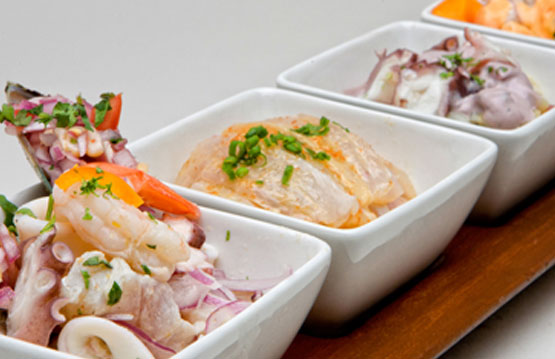
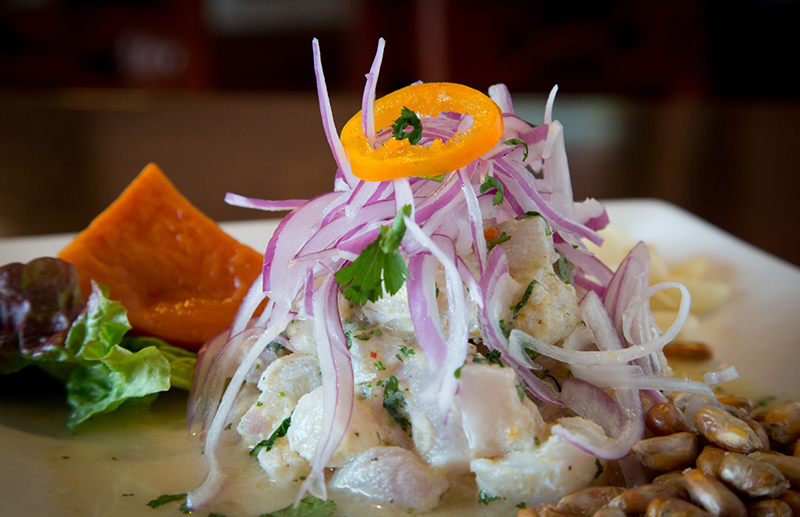
Ceviche de pescado. Fresh raw halibut is cut into pieces and marinated in a mixture of lime juice and limo chili. “I can’t get it here,” said Chan of the chili. “I have to go to Peru to get it.” Twice a year when he visits his family, he brings some of the frozen chilli back.
The ceviche comes on a plate with salsa criolla, which is thinly sliced red onions that have been marinated in yellow chilies, cilantro and lime juice. They’ve got a good kick.
Also on the plate are pieces of sweet potato that have been boiled in orange soda, cinnamon and sugar, and pieces of yuca a plant similar to a potato that has been boiled plain.
And there’s more. There’s also a small chunk of boiled corn on the cob and imported Peruvian toasted corn (we call them curn nuts here). And all of this, including the cob and sweet potato,are cold.
It’s one heck of an interesting dish, as well as being delicious.
Tamal Limeno Peruano. Similar to a Mexican tamale, this is made with dried corn that’s mashed up and mixed with saffron, dry Peruvian chilies and a chili sauce from Peru. This dough mixture is wrapped in banana leaves. Along with either chicken or pork, and steamed. Chan buys the tamals from a Peruvian purveyor and serves them with salsa criolla.
Papa rellena. If you’ve ever had a potato knish at a Jewish deli and imagined what the perfect knish would taste like, this might be it. Chef Humberto Olea and his crew boil potatoes, then mash them with salt and cool them. “Everything has to be cold.” Said Chan. “This is the secret.”
Ground beef is cooked with fresh garlic, onions, a little chili sauce, salt and black pepper.When the potatoes are cold, they are pushed flat, and some meat mixture is put on top. Then they are folded over the meat by hand and folled by hand into egg.
After that, they are rolled in flour and deep-fried. “You have to have a lot of experience to make it right,” said Chan, and I believe him. The finished large eggs are served with salsa criolla and a “little decoration of huancaina sauce, made from yellow chilies.”
Sopa a la minuta. “My mom taught me how to do it. Chan said. Every morning the cook makes a broth by boiling beef bones with carrots and onions. To make the soup. They add some oil that has been blended with the achiote spice for flavor. Now the broth is added to chopped onions, garlic, tomato and chicken or beef that have been sauteed together. Finally, vermicelli noodles are put into the soup. Followed by milk and oregano.
Tallarin verde con pollo apanado. “This is like Italian Peruvian,” said Chan. The green sauce is a pesto made with spinach, basil , Mexico fresh cheese, feta cheese, garlic, salt and walnuts, all blended together while cold. This sauce is tossed with hot spaghetti and topped with Parmesan cheese.
The other side of the plate has a chicken breast pounded out so it’s as thin as a cracker (part of the atmosphere at El Rocoto involved intermittent pounding heard from the kitchen that sounds like there’s a construction proyect back there) and is seasoned with salt, pepper and garlic. Breadcrumbs made from the hone-baked rolls are mixed with dry garlic, salt and pepper, and the chicken disks are dredged in the crumbs and then deep-fried in soy oil. Also on the plate are two chunks of potato that have been boiled and then deep-fried. They appear on many of the entrees.
Tallarin verde con bistek apanado. It’s beef made the same way as the chicken, including pounding.
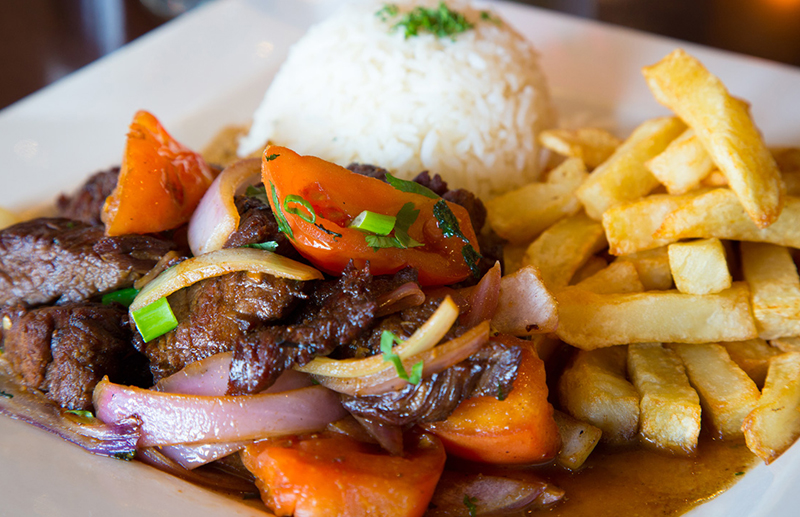
Pollo encebollado. This time the chicken breast is grilled on the flat grill and served with a stir-fried mixture of onions, tomatoes, soy sauce and garlic, plus rice and two piece of deep-fried potato.
Tallarin en trozos de pollo. This is chicken chow mein Peruvian style. What makes it Peruvian is that the chicken is first marinated with soy sauce, garlic and salt and then deep-fried. And then it’s stir-fried with Napa cabbage, snow peas, onions, bell pepper and soy sauce and combined with boiled thin noodles.
Seco de cordero. Lamb is cut into pieces and marinated with salt, cumin and garlic for a couple of hours. Meanwhile a cold sauce is made by blending cilantro with onions and carrots. Chopped onions and garlic are sauteed with the lamb when the dish is ordered, and then the sauce goes in, followed by beer and red wine. It’s served with steamed white rice, Peruvian beans and salsa criolla.
Peruvian beans. Canario beans from Mexico are soaked overnight and then boiled. Next the beans are sauteed with onions, garlic, cumin and salt.
Pescado al ajo. Filets of basa, which Chan said is a frozen fish from Asia that’s white, soft and easy to cook, are dredged in flour and deep-fried in soy oil. They’re topped with an intense sauce made with butter, white wine, fresh garlic and dried garlic. Rice and deep-fried potato pieces come with it.
Tallarin saltado de camarones. Shrimp is sauted with onions, tomatoes, soy sauce garlic, black pepper, salt and wine and then tossed with spaghetti.
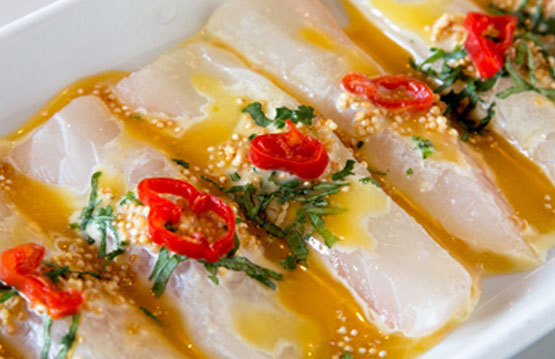
Pescado al vapor estilo Capon. Capon in Peru is Chinatown, Chan said, and this dish is a variation of Cantonese steamed fish. Basa fish -or if you prefer, you can cask for halibut or Chilean sea bass- is steamed and then seasoned with a mixture of soy sauce and sugar. Finally, ginger, cilantro and scallions are sliced and put over the fish fillets, and hot soy oil is poured over them to give their flavor to the fish.
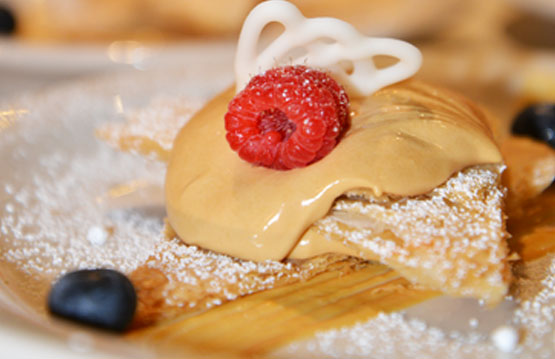
Desserts. Perhaps the most surprising thing about El Rocoto is how great the desserts are. Chan said they are baked by Monica Sanrindo, the wife of restaurant manager Jose Sanrindo. She is one talented baker. (Jose Sanrindo, by the way, is the brother of co-owner Jessica Chan.)
Her souffle cake involves “a lot of eggs and just a little flour and whatever fruit is in season, Chan said. Plus some great freshly whipped cream.
The chocolate cake looks dark but tastes light, and between the layers is some manjar blanco, similar to caramel and made from condensed milk, regular milk and sugar heated together.
The manjar blanco is also in the middle of two butter shortbread cookies. The cookie sandwich is called alfajores.
Lemon meringue pie is a stronger Peruvian version of the American standand. The lemon mixture contains lime juice, condensed milk and sugar.
Finally, for a fun drink. I’d suggest ordering sangria. It’s not like any sangria you’ve had, because it comes in layers, like one of those fancy drinks, “First we put in orange soda,” said Chan, ”then orange juice, then cabernet or merlot. We spoon it in.” A hint:Look at the pretty sangria, and then stir it up before drinking or it won’t taste very good.
Most of the entrees are $9 to $17, and that’s quite a range. But I found the tastiness of the dishes had nothing to do with the price, so you’ll probably get a good meal at any price.
Service was excellent. When things got busy, sometimes the hard-working servers were a litttle brusque, but the orders came out perfectly and arrived at the table fast and hot, and that counted for a lot with me.
The restaurant has a warm feeling, very family style, with a some classy art Chan brought from Peru, including reproductions of thousand-year-old three-dimensional art.
Chef Humberto Olea is from Mexico and learned Peruvian cooking at the Gardena restaurant. Assisting him in the kitchen Tany Torres, from Peru. ”She does all the seafood stuff and does specials on the weekend,“ Chan said.
With the cooking power of Olea and Torres, the baking artistry of Sanrindo and the restaurant experience of the Chans, El Rocoto is one of those places where you can figure on getting great food that’s exotic and new, yet tastes like something you’ve always liked.
|